Sponsored Content by PittconJan 30 2026
Most people, including scientists and health-conscious consumers, understand the importance of gut health. The gut microbiome, comprised of archaea, fungi, and bacteria, coexists with the host in a symbiotic relationship, benefiting both. Most microbial species are commensal, aiding the host by breaking down complex carbohydrates and fiber. However, a few potentially pathogenic species can cause disease if they disrupt the balance of the gut microbiota.
Given the gut microbiota’s role in various health conditions, ranging from metabolic to mood disorders, research in this area continues to grow. Researchers from various disciplines are now investigating key gut microbiome processes and functions to gain a deeper understanding of disease mechanisms. Similarly, the research community in the South Central and Southwestern United States is actively engaging in this burgeoning field. In this region, a growing biotechnology and biomedical industry supports high-impact research on the microbiome.
Building on this momentum, the presence of several Texas-based academic laboratories engaged in microbiome research, coupled with notable industry partners and biotechnology companies, positions the Lone-Star State as an ideal hub. Here, the brightest minds come together to drive the next phase of microbiome research. This collaborative energy is especially evident at events such as Pittcon 2026 in San Antonio, where analytical chemistry is increasingly seen as a key tool for unlocking the complexities of gut signaling and function.
Leaky gut: How dysbiosis causes disease
The gastrointestinal tract extends from the mouth to the anus. It is the pathway of the digestive system and is responsible for three essential functions in human metabolism: digestion, absorption, and protection. The site of nutrient absorption is the intestinal epithelium, also known as the intestinal barrier. This semipermeable structure in the intestine protects the intestinal contents from the body, the bloodstream, and potential pathogens.1
Like all specialized tissues, the intestinal epithelium and its structures are adapted for their function. The villi, small, finger-like projections of the mucosa, increase the surface area for more efficient nutrient absorption. Between the villi are the crypts of Lieberkühn, glands that constantly produce stem cells to replace older cells and ensure the renewal process. 1
Disruptions in the gastrointestinal organs, including the esophagus, stomach, and intestines, can have serious health consequences. One way dysfunction leads to disease is gut dysbiosis, a change in microbiota composition that can cause "leaky gut," where the barrier allows food particles or bacterial toxins into the bloodstream. Dysbiosis may increase disease risk through metabolic imbalance, impaired barrier function, and immune dysregulation. For example, an irritable bowel syndrome (IBD) study showed that lower SCFAs from dysbiosis result in increased permeability, a disease hallmark. 2
Modeling the gut with microfluidic devices
With over 2.86 billion prevalent cases of GI diseases recorded worldwide3, and gut dysbiosis also being implicated in conditions with high disease burdens, such as depression, researchers require innovative models to study such diseases. Traditional in vitro cultures have been developed that utilize multiple cell types; however, they rarely replicate the complex structure of the gut. It is particularly challenging to replicate the villi and crypts, which are essential for gut function.
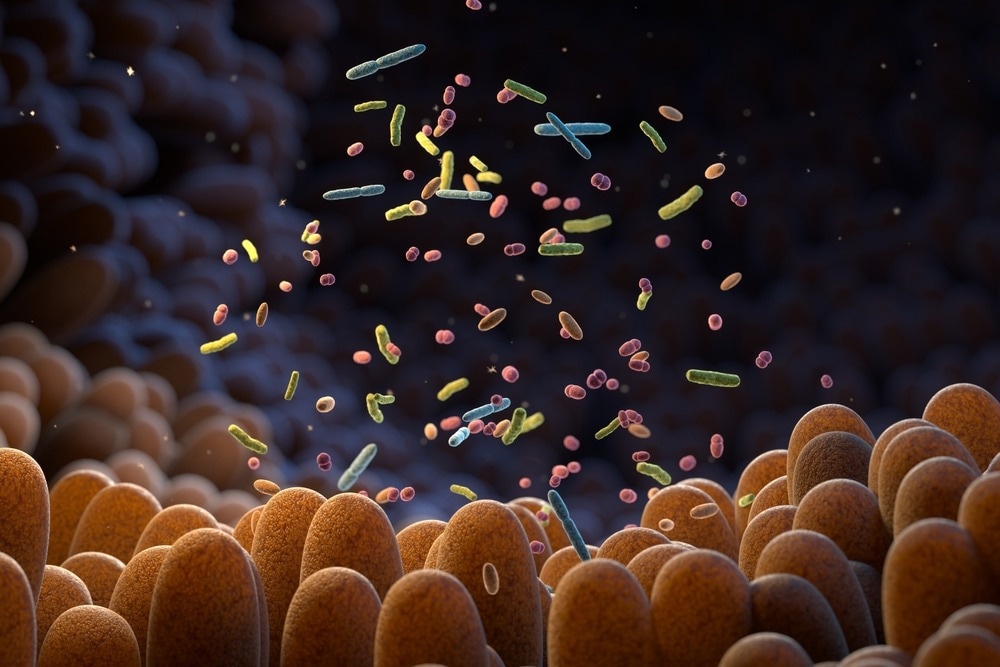 Image Credit: Tatiana Shepeleva/Shutterstock.com
Whilst in vivo models maintain biological accuracy, the local environment of the gut cannot be controlled, and many animals must be used in this research to account for individual variability. Ex vivo models provide scientists with the opportunity to study gut cells outside the body; however, maintaining the local environment remains a significant challenge.
Lab-on-chip (LOC) devices have garnered attention for their ability to address many of the challenges associated with the aforementioned models. LOCs do not directly require animals; they reduce reagent waste and enable better process control due to the system's faster response.4 In recent years, microfluidic gut-on-a-chip technology has emerged as a promising approach to studying the physiology of the gut, conducting drug testing and development, as well as investigating host-microbiome interactions.
At Pittcon, Dr. Charles “Chuck” Henry will present the work of his lab, showcasing the development of a microfluidic organotypic device that uses an ex vivo tissue slice model mounted in a microfluidic device to provide local control of the environment, including oxygen concentrations. Chuck Henry is a prominent Professor of Chemistry at Colorado State University, addressing global health and environmental challenges through his work on the miniaturization of analytical chemistry, particularly in the field of “lab-on-chip” technology. During his symposium, “Integrating an Ex Vivo Gut Model into Microfluidic Devices” as part of the Bioanalytical & Life Science track of Pittcon’s technical program, Dr. Henry will discuss the development of this system and its use to understand barrier permeability in models of dysbiosis.
Measuring along the gut-brain axis
Like dysbiosis, the gut-brain axis is the subject of increased research efforts due to its significant impact on human health. The gut-brain axis refers to the complex communication between the GI tract and the brain, which involves nerves, hormones, the gut microbiota, and immune cells. 5 With the gut-brain-immune axis emerging as a crucial target for developing novel therapies for neurological disorders 6, it is essential for researchers to have the analytical technologies required to investigate these pathways. With current technologies, such investigations remain challenging. Signaling along this axis occurs across multiple temporal and spatial scales, as well as across various biological systems, presenting a unique challenge in method development.
During the symposium titled “New Frontiers in Measuring Neurochemical-Regulated Immunity” to be presented at Pittcon, Associate Professor Ashley Ross of the University of Cincinnati will showcase her lab’s innovative approaches to sensing neurochemicals important along this pathway. The Ross lab has worked over the last several years to develop new organ- and multi-organ culture systems to better recapitulate the complex microenvironment of these systems ex vivo.
Much of their work has focused on integrating fast-scan cyclic voltametric detection of neurochemicals in tissues that have not been previously explored with this technique, including slices from the gut lymph nodes, spleen, and intestine. They have also worked to integrate these electrochemical approaches on-chip for multiplexed analysis of gut-brain-immune signaling.
The gut feeling at Pittcon
There’s a gut feeling that analytical chemistry is going to be essential for the development of gut microbiome models going forward. Pittcon shares this sentiment, bringing its world-leading exhibition and conference to the Lone Star State to foster connections and collaboration across academia and industry.
Attendees will have the opportunity to discover a diverse range of exhibitors showcasing equipment that can take their research to the next level. Among them will be microfluidic ChipShop GmbH (Booth 2355), a company that designs and manufactures polymer-based microfluidic chips and customized LOC systems used in diagnostics, life sciences, analytical chemistry, and point-of-care applications.
With technical experts and leading professors in attendance, Pittcon promises to be the premier destination for those at the forefront of gut microbiome research. To learn more about the remaining exhibitors and technical program, please visit the Pittcon website at https://pittcon.org/.
References and further reading
- Rao, J.N. and Wang, J.-Y. (2010). Intestinal Architecture and Development. (online) National Library of Medicine . Morgan & Claypool Life Sciences. Available at: https://www.ncbi.nlm.nih.gov/books/NBK54098/.
- Winter, S. and Bäumler, A.J. (2023). Gut dysbiosis: Ecological causes and causative effects on human disease. Proceedings of the National Academy of Sciences of the United States of America, 120(50). DOI: 10.1073/pnas.2316579120. https://www.pnas.org/doi/10.1073/pnas.2316579120.
- Wang, Y., et al. (2023). Global Burden of Digestive Diseases: A Systematic Analysis of the Global Burden of Diseases Study, 1990 to 2019. Gastroenterology, (online) 165(3), pp.773-783.e15. DOI: 10.1053/j.gastro.2023.05.050. https://www.gastrojournal.org/article/S0016-5085(23)00825-9/fulltext?referrer=https%3A%2F%2Fpubmed.ncbi.nlm.nih.gov%2F.
- Athina-Marina Mitrogiannopoulou, Tselepi, V. and Kosmas Ellinas (2023). Polymeric and Paper-Based Lab-on-a-Chip Devices in Food Safety: A Review. Micromachines, 14(5), pp.986–986. DOI: 10.3390/mi14050986. https://www.mdpi.com/2072-666X/14/5/986.
- Khan, M.T., et al. (2025). From Gut to Brain: The roles of intestinal microbiota, immune system, and hormones in intestinal physiology and gut–brain–axis. Molecular and Cellular Endocrinology, (online) 607, p.112599. DOI: 10.1016/j.mce.2025.112599. https://www.sciencedirect.com/science/article/abs/pii/S0303720725001509?via%3Dihub.
- Loh, J.S., et al. (2024). Microbiota–gut–brain axis and its therapeutic applications in neurodegenerative diseases. Signal Transduction and Targeted Therapy, (online) 9(1), pp.1–53. DOI: 10.1038/s41392-024-01743-1. https://www.nature.com/articles/s41392-024-01743-1.
About Pittcon
Pittcon is the world’s largest annual premier conference and exposition on laboratory science. Pittcon attracts more than 16,000 attendees from industry, academia and government from over 90 countries worldwide.
Their mission is to sponsor and sustain educational and charitable activities for the advancement and benefit of scientific endeavor.
Pittcon’s target audience is not just “analytical chemists,” but all laboratory scientists - anyone who identifies, quantifies, analyzes or tests the chemical or biological properties of compounds or molecules, or who manages these laboratory scientists.
Having grown beyond its roots in analytical chemistry and spectroscopy, Pittcon has evolved into an event that now also serves a diverse constituency encompassing life sciences, pharmaceutical discovery and QA, food safety, environmental, bioterrorism and cannabis/psychedelics.
Sponsored Content Policy: News-Medical.net publishes articles and related content that may be derived from sources where we have existing commercial relationships, provided such content adds value to the core editorial ethos of News-Medical.net, which is to educate and inform site visitors interested in medical research, science, medical devices and treatments.